
Dr. Nadine Burke Harris, California’s first surgeon general, on the impact of multigenerational adversity, SEL in the classroom, and the transformational powers of meditation. “We know that educators are the backbone of our society. As we do this work, I want to encourage you to put your own oxygen mask on first. Because we need you in this fight. We need you in this struggle. In order for any of us to provide that safe, stable, and nurturing environment for the children that we serve, we have to practice self-care so that we can be available. Please make sure to put your own oxygen mask on and practice real care for yourself so that you can be there for the next generation.” Read article
Oct 06
“End racism in our schools” is a California-based approach which centres on relationships
“Relationship-centered schools combine social-emotional learning with academics, help all students reach their full potential, offer the capacity and working conditions necessary for staff to develop meaningful relationships with students, address trauma, build resilience, confront bias, and distribute leadership among students, parents, and staff.” Use these 3 steps: Value student voice. Invest in staff. Create space for relationship buildingRead article
Oct 05
5 Research-Backed Tips to Improve Your Online Teaching Presence – Edutopia
- As the physical distance increases between you and your students, so can the psychological and emotional space. Here are some tips that can help.
- Go beyond speaking presence
- It’s more than just face time
- Signal presence through clarity and organization
- Get student feedback and respond to it
- Focus on surfacing connections and building relationships Read article
Oct 05
The Urgent Need to Avoid Punitive Responses to Poor Attendance, attendanceworks.org
“Research also shows that chronic absence is highly correlated with trauma. The more a child has had adverse childhood experiences, the more likely they are to miss school. The most effective response to trauma is asking “what happened to you, how can I help,” not saying “what’s wrong with you.” Most often, an empathic, restorative response aimed at addressing the underlying barriers yields better attendance.” Read article
Oct 02
Why so many students are missing so much school, attendanceworks.org
- “Barriers are factors that impede a student from getting to school. While some barriers affect families in low-income communities more, others such as transportation cut across all income levels.
- Negative School Experiences include a range of challenges, such as bullying or unfair disciplinary practices, that cause a student or a student’s family to avoid school.
- Lack of Engagement is the result of factors such as the absence of a relationship with at least one caring adult, or culturally relevant and engaging instruction, which results in a student feeling little or no connection to school.
- Misconceptions are common ideas about attendance that families or students believe to be true but are not. For example, too often missing class is only seen as a problem if absences are unexcused.” Read article
Sep 30
Morning meetings are a good place to start, but what you really need is a toolkit of strategies to meet your students’ social and emotional needs all day long.
“Child psychiatrist Pamela Cantor told Edutopia in 2019 that “when we’re able to combine social, emotional, affective, and cognitive development together, we are creating many, many more interconnections in the developing brain that enable children to accelerate learning and development.”
“A 2018 study showed that positive greetings at the door increased academic engagement by 20 percentage points, and decreased disruptive behavior by 9 percentage points—adding as much as “an additional hour of engagement over the course of a five-hour instructional day,”
“According to Dr. Nadine Burke Harris, California’s surgeon general, mindfulness helps to regulate the parts of the brain associated with the stress response, and is “associated with reduced levels of cortisol and other stress hormones” while positively influencing “the physiological indicators of an active stress response, like blood pressure and heart rate.” Burke Harris uses mindfulness with kids as young as 3 years old.” Read article
Sep 14
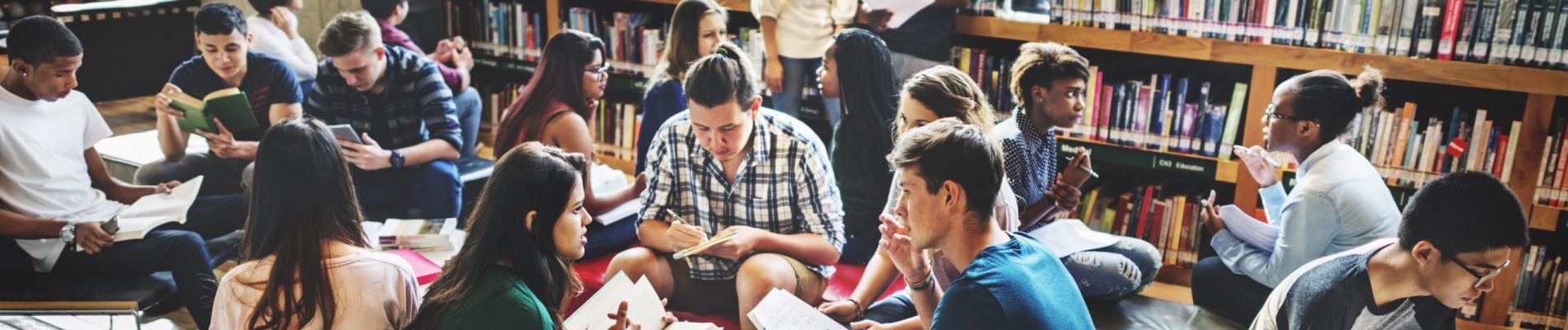
Conversation groups allow students to explore vulnerability about their experiences and build trust in one another.
“This school year, many educators face the challenge of building relationships with new students virtually. How can they foster a sense of community without the camaraderie and spontaneity of in-person, classroom interactions? One approach is to make more time for personally meaningful, nonacademic, youth-driven conversations. In my teaching practice, this has taken the form of This Teenage Life, a dialogue and podcasting program cocreated with young people where students talk about issues relevant to their lives, record them, and create a podcast. These conversations can serve as catalysts for storytelling projects and can be used to build trust and a sense of community. Facilitate successful conversation groups by building trust, allowing discussions to grow organically, encouraging participation, and practicing reflection. ” Read article
Sep 08
Using Social Justice to Promote Student Voice: Preteen students can gain confidence in their ability to navigate complex topics by using intersectionality to investigate social issues.
“One of the main issues middle school students share with me is their feeling of isolation and neglect when parents or guardians have in-depth, critical conversations about social issues and don’t include them. They also struggle with not knowing exactly where they stand on issues and not having the language to articulate their thoughts on these matters. Often, young people don’t have spaces in which they can really dig into what they’re thinking, process what they’re hearing, and ask questions to better understand what’s going on.” Read article
Sep 07
Seven deadly sins to avoid on the path to anti-racism
“Canada has a long history of racism: colonization, slavery, the residential school system, the Chinese head tax, the SS Komagata Maru, the Japanese internment and the demolition of Africville. Although Canada became the first country in the world to adopt multiculturalism as an official policy in 1971, Black, Indigenous, and people of colour have continued to face racism from our past to our present. As a nation, we have realized that we cannot live up to our promise of an equitable society if we continue to uphold overt and covert forms of racism. Race scholar Ibram X. Kendi says we are either racist or actively anti-racist, and there is no in-between. The work we are talking about is not just a necessary change, but one that is long overdue. However, even the best of intentions, strategies and plans can fail if they are not cognizant of the pitfalls ahead of them.” Read Article