
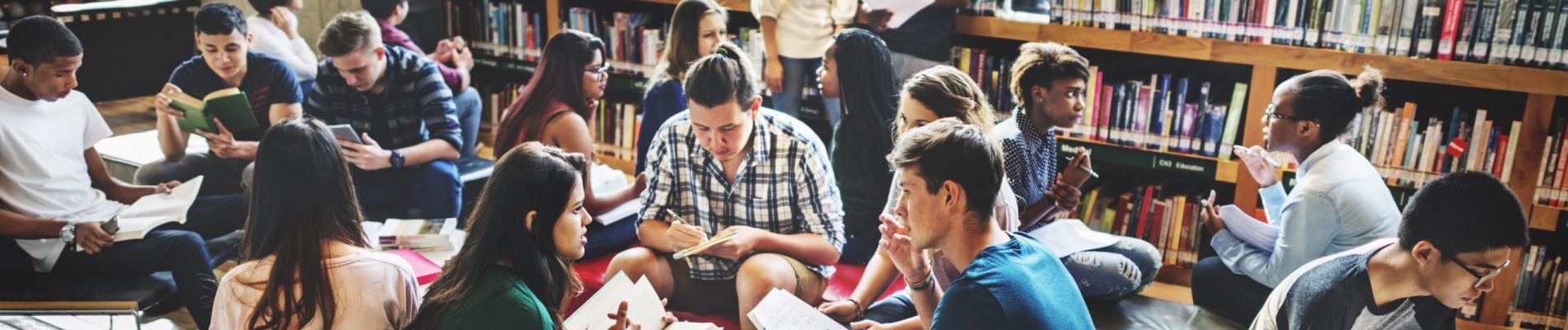
- “Summer leisure reading can feel like an indulgent start to slower-paced days away from school. But in the midst of the coronavirus pandemic and major social unrest, a thoughtful reading list feels downright essential right now as we readjust routines, adapt to pandemic-induced school changes, and work for a more equitable community. by Marissa King and Robin Harris
- Preparing for Change
- Addressing Inequity
- Wrestling with Loss
- Taking Care of Yourself
- Reimagining Schools ” Read article
Jul 08
For Teachers: Summer Reading During Turbulent Times Influenced by the pandemic and social unrest, two teachers recommend books to read this summer on topics like wrestling with loss, addressing inequity, and recharging for the school year ahead.
Jul 06
Teaching and Leading Through a Pandemic Key Findings from the American Educator Panels Spring 2020 COVID-19 Surveys by Rand Researchers
- Recommendations include:
- #1 Teachers need professional development to help them address the challenges of distance learning, especially teachers who are working with the most vulnerable students.
- #4 Both principals and teachers need better ways to contact students and families. School and district emergency plans should include efforts to ensure they have contact information for all students and families.
- #5 The pandemic has caused principals to reprioritize goals and tasks. District leaders should be prepared to help them as they shift to plan for emergencies, address learning gaps, and deal with student mental health issues that might be exacerbated by the pandemic’s effects. Read article
Jul 03
A restorative approach is key for a new normal after COVID-19 by Jennifer & Kristina Llewellyn
“Social distancing has shown us that our siloed and fragmented social systems and services will be stronger with more integration and interconnection…..What has been revealed is that we need to work in more relational and integrated ways, not only in this extraordinary moment of crisis but also in ordinary times. We need a relational shift because the virus has shown us what we always need to be safe, to be well, and to flourish….Restorative justice advocates have long recognized justice as relational work concerned with ensuring just relations and addressing the harms resulting from injustice — harms caused at the interpersonal level and at systemic and institutional levels. But what this pandemic has made so clear to us all is the importance of being proactive to prevent harms and promote our well-being rather than waiting to respond after harm occurs. “Read article
Jul 02
WhatsApp justice for teenage victim of homophobic gang attack
“A teenage boy who was attacked by a gang of youths in a Brighton park is the first to receive an apology via WhatsApp video as part of Sussex Police’s restorative justice project. The scheme, dubbed Restore DiverCity, gets offenders to speak directly to their victims so they can appreciate the impact of their actions and make amends directly.It’s used when victims don’t want to press charges and would be more comfortable using this method. The Brighton teenager was physically attacked by five other youths in a local park and had homophobic language used against him. ” Read article
Jun 30
Connectedness beats metrics: an article by John W. Bailie
“Whether you’re the newest intern or CEO, most people in an organization recognize that everyone has a functional role to play in a highly organized setting.
In fact, much of what we reward or punish in such systems revolves around the willingness and proficiency in playing one’s functional role in that system – not the ability to form quality relationships….Connectedness always beats metrics as a predictor of group performance. Read article
Jun 29
How schools are using restorative justice to remedy racial disparities in discipline
“Fania E. Davis is a long-time social justice activist, civil rights trial attorney, restorative justice practitioner, and writer and scholar with a PhD in indigenous knowledge. In “The Little Book of Race and Restorative Justice,” Davis examines the still-pervasive, centuries-long cycles of racial prejudice and trauma in America and their repercussions, ranging from educational inequities to mass incarceration. To inspire a positive action toward change, she highlights real restorative justice initiatives that seek to address these issues in schools, justice systems, and communities. This newest addition to the Justice and Peacebuilding series is a much needed and long overdue examination of the issue of race in America as well as a beacon of hope as we learn to work together to repair damage, change perspectives, and strive to do better. Read article
Jun 28
Making space for restorative justice
Restorative justice, … is a huge component of this new vision of justice. As a practice that facilitates conversation, restorative justice allows a crime survivor to explain what they need to make things right, and then holds the guilty party accountable for doing it. It’s a victim-centered process in which everyone is treated with dignity and no one ends up incarcerated.So instead of wading through a court system that may never supply victims with a sense of closure, they gain understanding that allows them to forgive and begin to move forward. And instead of enduring a harsh punishment that’s disconnected from the actual reason the harm occurred, the person who’s responsible makes amends in whatever way is necessary—and in the process change a bit themselves. Restorative justice has been gaining acceptance in youth settings, particularly as an alternative to traditional school discipline. But many advocates think it can be used much more broadly. “I think it can go all the way,” says baliga. “I think we can do all cases.” Not yet, of course; there’s a lot of capacity building that needs to happen within communities to learn how to constructively address conflict. Read article
Jun 27
Washington Post – What five black fathers are saying to their children about this historic moment
In recent weeks — amid a global pandemic and a historic national uprising against police brutality and systemic racism — a lifelong racial justice advocate sat down with his 9-year-old daughter to talk about the protesters marching in the streets. A retired New York City detective worried for the safety of his son, a police officer outside Atlanta. A city housing manager with a 3-year-old and a pregnant wife watched the national demonstrations unfold, fearful of the virus that might be moving among the crowds. The chief executive of a national nonprofit organization helped his 11-year-old boy make a protest sign. A civil engineer took his three young sons to downtown Washington to join the demonstrators demanding justice after the killing of George Floyd. Link to article
Jun 26
Edutopia reports that Teachers Around the World Tell Us Reopening Is Tough, but Joyful – In countries where infection rates have stabilized, schools are reopening
- ” Edutopia article had worldwide feedback from over 600 teachers about their return to class and what they shared was:
- THE BIG PICTURE—THINGS ARE GOING WELL
- ALTERNATE DAY ATTENDANCE IS THE NEW NORMAL
- NO MATTER WHAT YOU DO, YOU’LL NEED GOOD TECHNOLOGY
- WATCH FOR A SPECIAL CASE OF TEACHER BURNOUT
- STILL IN MOTION AT SOME HIGH SCHOOLS (AND MIDDLE SCHOOLS)
- EVEN ON HEALTH AND SAFETY, CHANGING PROTOCOLS” Read Edutopia article“
Jun 26
Four officers, no weapons, no charges: A Yukon First Nation’s solution for keeping the peace – Globe & Mail
In Whitehorse, colonialism and crime have damaged the people of Kwanlin Dun’s relationships with the RCMP and one another. Now, a pilot project is trying to do policing differently — and Indigenous people around the world are taking notice. link to article